


Three Cores, One Mission: Better Science, Healthier Communities
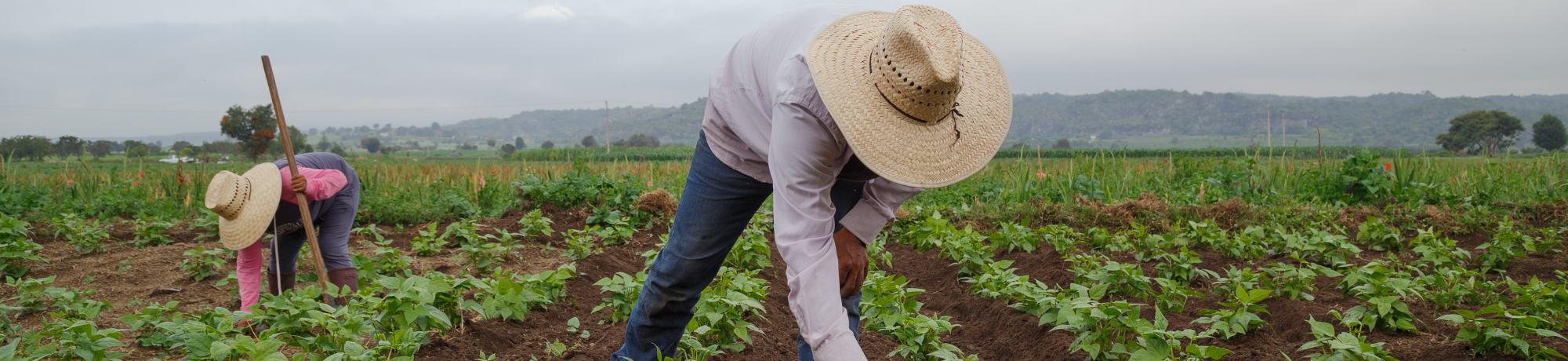
Community Engagement Core
Director
Jonathan London, PhD
One of the main priorities of the UC Davis Environmental Health Sciences Center (EHSC) is to help develop partnerships between environmental health researchers and the communities where they work. EHSC’s Community Engagement Core (CEC) works with researchers and community groups to help build these relationships, which focus on the San Joaquin Valley and other areas throughout California. The CEC does this by:
- Facilitate the Community Stakeholder Advisory Committee (CSTAC). The CSTAC is an integral part of the CEC. It’s made up of government and community leaders in environmental health or justice organizations who are committed to bridging communities and academia to solve pressing health problems. CSTAC members guide research to address the needs of vulnerable populations in California and collaborate directly with researchers on their Pilot Projects.
- Set community research priorities. Working with the CSTAC, the CEC manages a list of research priorities from the community. These priorities are based on environmental health impacts communities experience as well as the issues environmental justice organizations identify. This list is available to researchers looking to develop Pilot Projects or other research proposals
- Provide researchers with training and mentoring. With our Community Based Participatory Research Training and one-on-one mentorship with faculty, the CEC helps scientists working on Pilot Projects or doing other research find new ways to incorporate community engagement in their work and build successful community partnerships.
- Run the Community Environmental Health Science Academy. The CEC trains community leaders in concepts and methods of environmental health science to support informed participation in EHSC research. This event happens annually and focuses on a range of environmental health topics.
The National Institute of Environmental Health Sciences (NIEHS) also promotes community-engaged research through its Partnerships for Environmental Public Health. NIEHS provides funding for EHSC.
Community Engagement Core Leadership
The Community Engagement Core at UC Davis brings together researchers and community partners dedicated to advancing environmental health across California's most vulnerable regions. Directed by Dr. Jonathan London, the core combines expertise in participatory research, rural community development, and community-engaged planning to ensure that scientific inquiry is grounded in the real health challenges communities face.
London's work spans a wide range of environmental concerns — from unsafe drinking water and pesticide exposure to air pollution and cumulative environmental vulnerability — shaping both EHSC research priorities and public health policy. Together, he leads a collaborative effort to bridge the gap between environmental health science and the communities it serves, translating research into action where it is needed most.


Environmental Exposure Core
Co-directors
Deborah Bennett, PhD
Anthony Wexler, PhD
The Environmental Exposure Core (EEC) provides researchers with expertise in study design, selection of appropriate and effective exposure assessment methods, as well as guidance and tools for interpretation of exposure assessment data. Qualified researchers can apply for financial assistance through the EHSC Seed Grant Program.
In addition to serving as a resource for UC Davis researchers, the EEC collaborates with the CEC to provide technical assistance to stakeholder groups concerned about community exposures.
EEC member laboratories include:
- Air Quality Research Center: Filter analysis including mass and chemical speciation. Real-time instrumentation includes particle size distribution, toxic metals, volatile organic compounds, ozone, sulfur dioxide and nitrogen oxides. Novel methods for population exposure to the extreme particle concentrations during wildfires
- Aerosol & Chemical Ionization Mass Spectrometry Lab: Provides real-time and offline aerosol and chemical ionization mass spectrometry for non-targeted, quantitative chemical characterization and source apportionment of environmental samples, supporting exposure assessment and environmental health studies.
- Caldecott Tunnel Exposure Facility: Exposure facility at a busy traffic tunnel where exposures to Traffic-Related Air Pollution can occur over short or long periods.
- Environmental Analysis Laboratory: Conducts target and non-target analysis of organic constituents in environmental samples and investigates associations with in vitro assays, in vivo toxicity tests, and human health
- Environmental Health Engineering: Evaluates bioaccumulation of contaminants, fate and transport of environmental pathogens, and nature-inspired treatment systems to reduce exposures to chemical and microbial contaminants.
- Exposure Science Laboratory
- Particle Measurement and Modeling Laboratory
- Primate Inhalation Toxicology Laboratory
- PM Measurement and Modeling: Conducts mechanistic regional modeling to predict population exposure to air pollution mixtures including ultrafine particles and wildfires.
- Sensor Development Laboratory
- Spada Lab: Dr. Nicholas Spada utilizes nuclear methods for characterizing aerosols as a function of size and time to better understand their impact on human health and the global environment.
- UCD-Interdisciplinary Center for Inductively-Coupled Plasma Mass Spectometry
- Water Quality Laboratory: A wide range of analyses in water, including anion/cations, metals/metalloids and isotopic composition.
- West Coast Metabolomics Center: Applies novel analytical methods that have high sensitivity and selectivity to quantitatively measure specific organic pollutants and non-persistent pesticides and bioactive lipid mediators (oxylipins).
- Wildfire PM Generation and Collection: Archive of collected wildfire smoke on filters for later chemical analysis or toxicology studies. Wildfire smoke generator for simulating exposures in the laboratory. Full wildfire smoke exposure facility under construction.
Environmental Exposure Core Leadership
The Environmental Exposure Core at UC Davis brings together leading scientists dedicated to understanding how environmental chemicals and air pollutants affect human health. Co-directed by Dr. Deborah Bennett and Dr. Anthony Wexler, the core combines expertise in exposure science, aerosol research, and engineering to trace how harmful substances move through the environment and into the body. Their work spans a wide range of health outcomes — from asthma and cancer to autism and Alzheimer's disease — informing both research and public health policy. Together, they lead a collaborative effort to advance the science of environmental exposure and reduce the burden of pollution-related disease.


Translational Research Services Core
Co-directors
Nicholas Kenyon, MD
Cristina Davis, PhD
Rebecca Schmidt, PhD
The hub of disease and biomarker research, the Translational Research Services Core (TRSC) is a liaison to animal laboratories, human clinical studies, tissue biorepositories and statistical support that connects EHSC researchers' work with CEC and community partners.
The TRSC provides researchers with access to experts and resources in multiple colleges, schools and centers, including:
- Animal Models. This subcore capitalizes on the premier Mouse Biology Program, the renowned California National Primate Research Center, and a unique Behavioral Assessment Laboratory, supporting science that examines the mechanisms that explain epidemiologic study findings, and connects findings from molecular and cellular studies to human health.
- Biostatistics. Our two biostatisticians Kyoungmi Kim, PhD and Mariela Alaniz, MS are dedicated to environmental health and omics research, providing essential services to interdisciplinary teams, such as helping with experimental study design, reframing the scientific question into a testable hypothesis and identifying the best analyses. The biostatistics subcore also helps interpret results in the context of the problem and grant writing, including statistical plans and sample size calculations. This approach helps weave together the strengths of each discipline to increase the quality of environmental health research and strengthen the inference from experiments, observational and community-based studies. To schedule an appointment, contact Kyoungmi Kim ([email protected]).
- Biomarkers. The Biomarkers subcore partners with the Genome Center and West Coast Metabolomics Center for exposure and genome, epigenome, transcriptome, and metabolome signatures. In partnership with the CTSC, the TRSC has collaborated in the development of an interactive web-based system to facilitate access to biological specimens and data from well-characterized study populations. The Virtual Biospecimen Discovery (VBD) is a searchable database containing meta data on over 200,000 biospecimens from a dozen tissue banks (both human and animal). Learn more and access the VBD here.
- Translational Research. Partnering with the Clinical and Translational Science Center’s Clinical Trials Resource, this subcore provides assistance with experimental design, IRB submissions, and regulatory compliance to promote human subjects research on environmental chemical exposures and accelerate development of public health interventions.
- Community Engagement Core. The TRSC works with CEC to foster scientist/community partnerships to plan, conduct and interpret environmental health research projects in targeted communities.
Translational Research Services Core Leadership
The Environmental Health Sciences Center's Translational Research Services Core brings together an exceptional team of researchers united by a shared commitment to multidisciplinary innovation. Our leadership models a new paradigm for environmental health research — one where diverse expertise converges to tackle complex problems no single discipline could solve alone. From the lab bench to the bedside, their collaborative work exemplifies EHSC's vision of translating bold, cross-disciplinary science into real-world solutions for human health.


